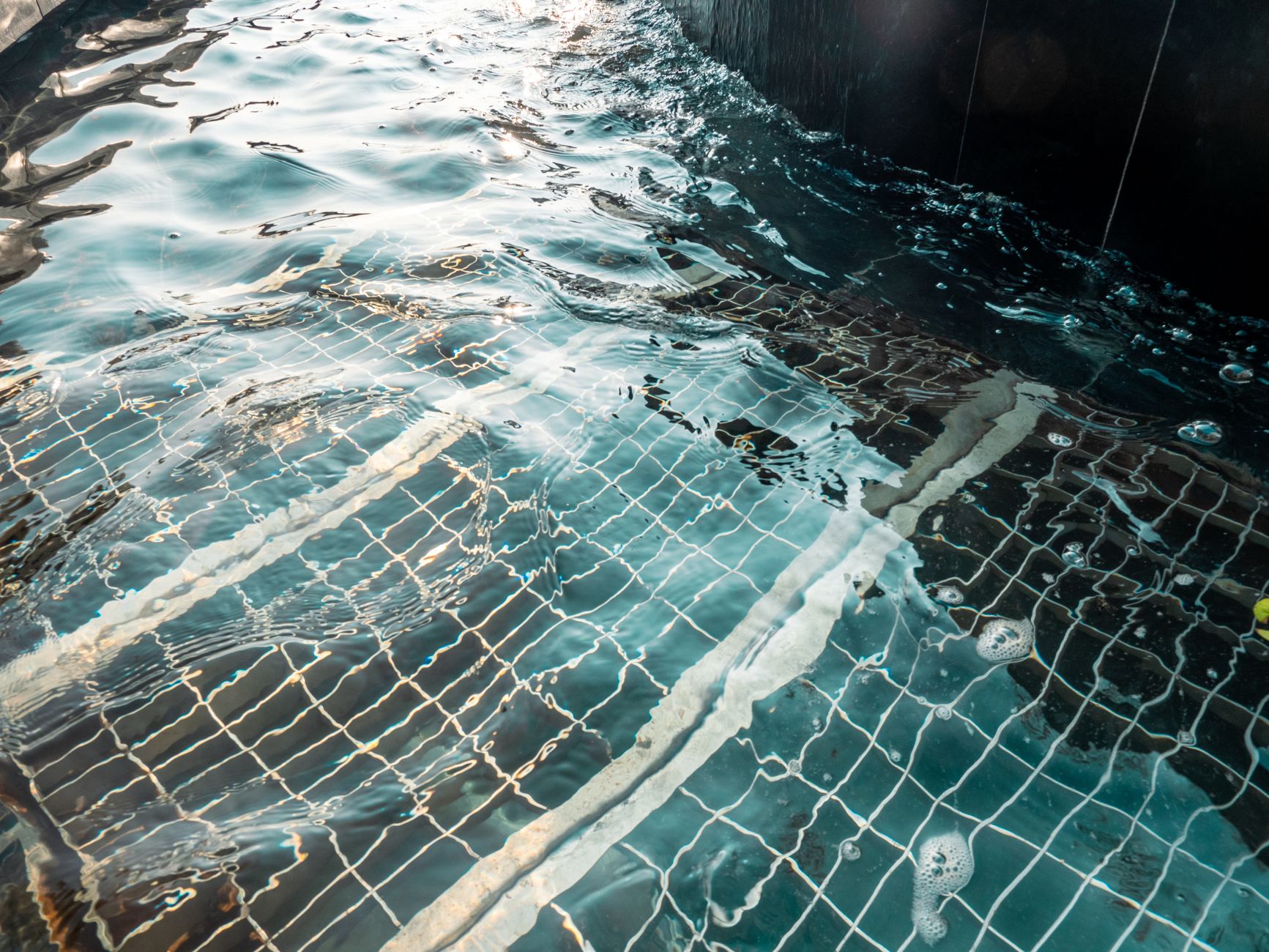
How a salt pool actually works
The common misunderstanding is that a saltwater pool has no chlorine, and it does; it just makes its own. A salt cell runs the salty water through a process that generates chlorine continuously, instead of you adding it by hand. So you still have a chlorinated pool, but the chlorine is produced steadily and gently rather than dosed in slugs, which is what gives salt pools their reputation. Knowing that helps you understand what you are actually maintaining.
Why people like them
The appeal is real: the water feels softer and silkier, it does not have the harsh chlorine smell or the red-eye of a pool that gets shocked with a jug, and you are not handling and storing as much chlorine. For a family pool that gets a lot of use, especially with kids, that gentler water is a genuine quality-of-life upgrade, which is why so many pools here are salt. It is a nicer swim, not a gimmick.
The maintenance nobody mentions
Salt pools are lower-hassle on chlorine but not maintenance-free, and the part people are not warned about is the salt cell. It is the component that makes the chlorine, it needs periodic cleaning as it scales up, and it wears out and has to be replaced every few years, which is a real cost. The rest of the chemistry still has to be watched too.
A pro who services salt pools keeps the cell clean and tells you before it dies, so you are not surprised by a green pool and a cell bill at once.
- A salt pool makes its own chlorine from salt, gently
- The water feels softer and smells less like a pool
- The salt cell is the part that needs care and eventually replacing

Questions people ask about Saltwater Pool Systems
Will salt water wreck my deck or equipment?
The system is built for it, and the salt level is a fraction of seawater. The honest cautions: rinse splash-out off soft stone decking, and keep the salt cell maintained. Equipment corrosion horror stories usually trace to neglected bonding or chemistry, not the salt system itself.
How often does the salt cell need cleaning?
Check it every few months, and expect scale to build faster here because our fill water runs hard. A scaled cell quietly makes less chlorine until the pool slides toward green with everyone confused. Cell checks are exactly the kind of thing a weekly service tracks so you never think about it.
Can my regular chlorine pool convert to salt?
Usually, and the conversion is simpler than people expect: the cell and controller plumb in at the equipment pad, salt goes in the water, done in a day. The check first is equipment compatibility, especially heaters and older metal components. From there it is a straightforward upgrade.
New to this? The plain-English guide to ordering walks through what to decide first.